
The appeal of regions and shifting mobility trends
Today, decisions to relocate are more carefully considered and are part of a long-term lifestyle change, in which community ties and local convenience are key factors. This is highlighted in the ‘Paris, I’m Leaving You’ study (Bastille, 2025). But how can we respond to the new aspirations of French people seeking a new place to live? Here’s a look at three drivers of attractiveness identified in the study, along with possible avenues for communicators to explore.
Titled ‘Parisians and mobility: a search for considered and sustainable happiness’, the second edition of the ‘Paris, I’m Leaving You’ study, conducted in partnership with the Bastille agency four years after the first edition, shows that 85% of Parisians still wish to leave Île-de-France, but with more considered and sustainable aspirations. “Some people left fairly quickly after Covid, largely because they could work from home. Parisians are still thinking about leaving, but with less urgency (plans within five years) and more pragmatism”, explained Camille Aubergeon, a specialist in public communication and regional attractiveness and partner in ‘Paris, I’m Leaving You’, and Kelly Simon, co-founder of ‘Paris, I’m Leaving You’, at the 2025 Conference on Territorial Marketing and Identity, Lyon. Focussing on new profiles, under-recognised assets and the importance of social ties and local anchoring, the pair highlighted three trends emerging from the study and explored levers to emphasise in territorial communication.
Ensure singles are included
While active professionals and families or couples remain the majority among Parisians looking to move elsewhere, the study shows a significant rise in single profiles (+83% over four years). 42% of singles are considering relocating to another area, compared with 23% in 2021. This shift represents an opportunity for territories to reach a new audience. How? First, by identifying the expectations and obstacles faced by singles. “Although age group and professional profile differ little from the couple/family target, the single audience has specific characteristics that are important to consider”, the speakers noted. They highlight fear of loneliness, difficulty integrating and challenges in rebuilding a social network as the main barriers to mobility. As a result, singles are looking for:
- A welcoming region that fosters social connections (with neighbours, colleagues, etc.), integration and access to a rich cultural and leisure offering;
- Accessibility, with good transport connections;
- Work-life balance, with workplaces favouring in-office presence alongside working from home.
Next, by creating the right communication materials:
* Testimonials (editorials, podcasts, videos) from singles who have settled in the region;
* The promotion of features that make the area accessible and welcoming: train stations, transport networks, cycling infrastructure, local associations, newcomer groups, sporting and cultural events, etc.
And lastly, by being present through an enhanced ‘welcome and support’ approach. “In Reims, a group for young newcomers and the organisation of events is working really well”, a participant at the workshop confirmed. In the same vein, the speakers pointed to inspiring private initiatives, such as the Timeleft app, which allows groups of five or six strangers to get together over dinner, drinks or a jog.
Highlight proximity to water and the accessibility of the region
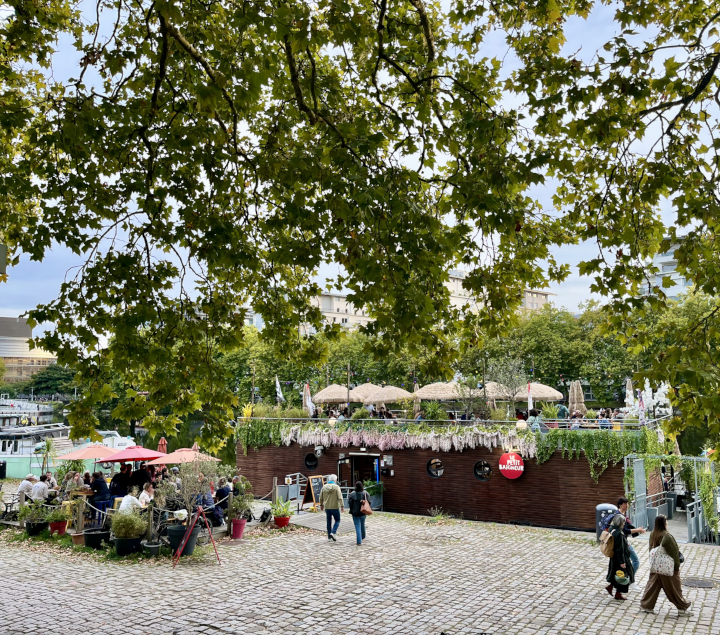
61% of Parisians planning to move prioritise living close to water in their choice of environment, in all its forms: sea, ocean, lake or river. “This asset isn’t limited to coastal areas. Remember to highlight proximity to any body of water in your communication materials.”
Another factor not to be taken for granted by these targets, and worth emphasising in messages, is the accessibility of the region. Future residents want to be able to get around easily, both within and beyond the area. They are particularly sensitive to:
- High-speed train (TGV) stations: essential for 73%;
- Proximity to a major city: 48% want to remain within 30 minutes of a large urban area;
- Public transport networks: 55% want to have the option of travelling by public transport;
- Cycling infrastructure: 50% want to be able to get around by bike;
- Walkable amenities: 53% want to live near a town centre with easy access to all essential services, ideally on foot.
Foster social ties and engagement in community life
Just as Parisians don’t want to feel geographically isolated, they also don’t want to be socially isolated. 45% are looking for social connections in their new community. Communicators need to show that integration is possible by emphasising initiatives that encourage relationship-building, such as:
- An ambassador network with concrete actions: mentoring programmes pairing a local resident with a newcomer, guided visits of the local area;
- Workplace life (to be highlighted in employer branding materials);
- Showcasing local associations and sports clubs;
- Events for new residents, such as welcome days or evenings.
Côte-d'Or Attractivité, for example, hosts an autumn event for newcomers at a landmark venue, structured in two stages: an initial meeting with local housing, employment and leisure stakeholders to learn about what the area has to offer, then an evening where attendees wear name tags showing where they live and hear feedback from participants of the previous edition. A kids’ corner with babysitting, together with actors and role-play games encourage interaction. Feedback has been very positive, and the agency is exploring ways to generate content from the event to leverage the occasion.
People no longer move to a region simply to escape another; they move to make a positive impact, with the goal of considered and sustainable happiness.
Beyond social connections, finding a place that feels right also involves getting involved in local life and contributing to community projects. “People no longer move to a region simply to escape another; they move to make a positive impact, with the goal of considered and sustainable happiness.” Those considering relocation want to put down roots in their new community. They want to be able to pursue professional projects (creating a co-working space, taking over a business, starting a company), get involved in associations (joining or founding one) or even participate in local politics, particularly in smaller municipalities. It is up to communicators to continue, or even strengthen, the visibility of local dynamics and the actors and residents who drive them, so that newcomers ready to settle long-term are encouraged to join.