
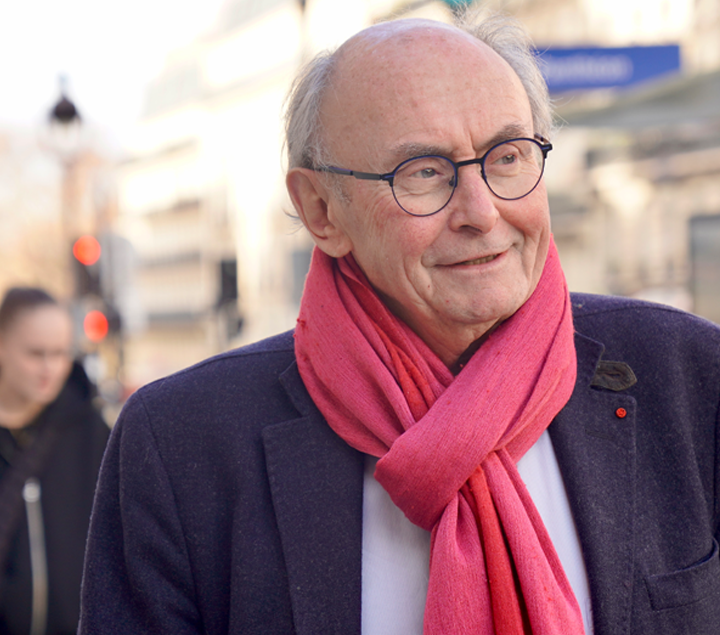
Carte blanche to Dominique Wolton
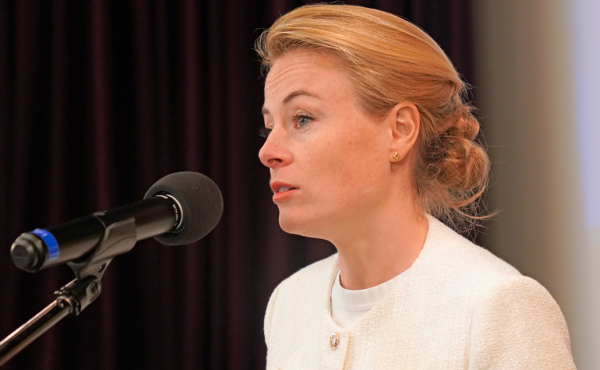
“The professions of communication, in both the public and private sectors, reveal how communication itself is perceived and valued in our societies.” Following the publication of Radioscopie des communicants publics – a study that profiles public communicators and tracks how the profession is evolving – Dominique Wolton analyses the changing nature of communication, “less focused on ‘comms’ and more attuned to the complexity of today’s societies.”
The author
Dominique Wolton is the founder and director of the international journal Hermès. He also oversees the paperback series Les Essentiels d’Hermès and the CNRS Communication collection. A doctor of sociology, he founded the CNRS Institute for Communication Sciences (ISCC) in 2007 and recently delivered the opening plenary at the Cap’Com Forum in Toulouse (2023). In 2024, he published Penser l'incommunication.
The status of communicators
The status of ‘public’ communicators has the advantage of offering greater stability than roles in the private sector, yet, in some ways, both are part of the same movement – what might be described as a “turn to communication” as a new way of understanding reality and a new instrument for social and professional relations.
The days when communication was reduced to ‘comms’ and ‘PR’ are long gone. Recognising the importance of communication also means acknowledging that the ways in which social relations are understood and represented have changed. People talk more, exchange ideas more freely – something is shifting. Over the past half-century, society has become less rigid. Power structures still exist, but the system is more open. Civil society is reshaping established models, working relationships and everyday life.
As a result, there can be no power without a logic of communication – in other words, without negotiation, without some degree of recognition of others, and without taking context into account. Many things have become more flexible, though not necessarily simpler – particularly in the public sector. Examining the work and the changing roles of public communicators means therefore involves looking closely at reality itself, including its shifts and contradictions. One thing is certain: contemporary political communication cannot be understood without considering the coexistence of the internal dynamics of administration and politics, as well as the importance of context, the press, journalists, public opinion, partners and opponents. And there are far more actors involved today than there were fifty years ago. In the space of a single generation, communicators have broadened not only the scope of their work but also how their role is perceived across territories.
Communication is no longer about promotion, but about negotiation and recognising others.
Which local authority, especially at a time when inter-municipal cooperation is expanding, could operate effectively without the support of communicators? Everyone sees the importance of their role in terms of visibility, connection and negotiation. It is no easier, given the conflicting dynamics involved, but at least we recognise that it is more complex.
This illustrates the essence of “communication”: negotiation has become embedded in the way our societies operate. We have shifted from a purely informational logic – focused on messages and hierarchy – to the more complex logic of communication, which requires recognising others and the role of negotiation. In short, moving from information to communication is not just about shifting from messages to relationships; it is also about navigating the challenges of negotiation.
Communicators exemplify this shift from information to communication, from hierarchy to negotiation. The cards are being reshuffled and the growing recognition of communicators highlights the rising status of communication itself. It is no longer about promotion, but about negotiation and recognising others. It is a more engaging process, albeit a more complex one. Today, communication goes far beyond promotion and is primarily about managing the negotiations necessary for coexistence.
Communication is now always about the other parties and negotiation. And this is why communication professions are inseparable from a broader, more complex vision of communication. Everyone seeks communication, not through a hierarchical vision or “comms”, but as a means of better organising the coexistence of human and social dynamics.
The communicator? An increasingly essential partner in the way social relations operate.
That’s where we are today. Communicating means negotiating – and simply providing information does not always count as communication. In between lies the shift from information to communication, from messages to relationships. With the growing role of incommunication, which is not a failure but a way to revive negotiation and avoid what might be called acommunication, namely the breakdown of exchange. In other words, communicators have to navigate three scenarios. Communication, incommunication and acommunication.
And the growing significance of incommunication also reflects a change in the meaning of the term itself. In the past, incommunication was the failure of communication. Nowadays, it is less about reviving negotiation than about trying to avoid failure.
The aim? To resume negotiation. To make incommunication the very condition for revival. This encapsulates the status of communication, of those who work in it, of partners and of the changing contexts. In reality, everything is changing, without necessarily becoming simpler. Even if situations are more open, bureaucrats remain, often reinforced by the status of local public services. The communicator? An increasingly essential partner in the way social relations operate. A less unequal and more discursive vision that is more focused on negotiation and ultimately on openness and comparison.
This is not the disappearance of authority, power or pervasive bureaucracy, but the recognition of the complexity of these dynamics, along with the increased visibility of how social relations function. At the heart of it all lies the omnipresence of negotiation.
The complexity of communicators’ roles mirrors the complexity of both society and communication itself.
Local and regional politics provide a clear example of how the status of communication is evolving. We are far removed from simple “comms” and much closer to the complexity of contemporary societies. This is not about following a “formula”; it involves thoughtful action aimed at reconciling conflicting dynamics. What makes this broader political communication interesting is its territorial dimension, linked to people’s everyday environments.
Territorial communicators are, in a way, obliged to engage with individuals in all their complexity, considering how they relate to life itself, while navigating the daily difficulties and contradictions. Imposition is increasingly rejected; people want to understand and sometimes participate! But this takes time.
The complexity of communicators’ roles mirrors the complexity of both society and communication itself, which underscores the role of the human dimension in all exchanges.
The paradox is that just as communication becomes increasingly human-centred, digital technology – including AI – proposes an increasingly technical world. Will communication continue to emphasise human connection, or will it be increasingly replaced by technical processes?
Technicise or humanise. And the question touches almost every area of daily life, from work and health to education.
In other words, territorial communication is positioned between two logics. Deepening its role and legitimacy in managing human and social relations… while becoming increasingly technicised through the many applications of AI and digital technology.
Initiatives to pursue
The first and most important is to actively strive for greater recognition and legitimacy. Progress is slow and cautious. Communication is about managing coexistence to avoid failure. It is about learning how to gain recognition for the talents and the necessities of negotiation, which requires a genuine effort in training and acknowledging experience; embracing the central role of incommunication, not as failure, but, on the contrary, as a prerequisite for mutual understanding. Incommunication, or the renewed effort to negotiate. Communication does not prevent power struggles or misunderstandings; it simply provides a means to try to manage them. It is a form of political intelligence that can benefit politicians, society and the economy alike. Some initiatives and symbolic gestures are needed to highlight this intermediate dimension, which is more vital now than ever. The risk is societal rigidity. Within this framework of recognition, it is important to clarify the differences between public and private actors. Both are useful, provided the competition between them is explained. Looking ahead, we should adopt a more cautious approach to trends, remote working and AI. It is worth recalling the history of innovation: for over half a century, it has regularly promised that everything will change. We should also remember the importance of human experience which tends, however, to be consistently undervalued.
Communication, in reality, requires mobilising all activities to achieve coexistence. It is not about quick fixes, but about methods and effort. If technical communication alone were sufficient for understanding, with the force of technical progress, individuals and groups would have long since understood one another. It is therefore essential to maintain a critical distance from the allure of technical ideology and recall that the focus must remain on individuals, groups, communities and others. Another initiative? Show the strengths, limits and weaknesses of inter-municipal cooperation. It represents a new scale of governance, but how far can it go? Analyse the main advantages and shortcomings. Make an assessment of inter-municipal cooperation and suggest further initiatives. This should include comparisons with other European countries. Which initiatives have been more or less effective? Particularly given the crucial role of local administrations and the differences between towns and cities. There is no equality between regions and the experience of communication can play an important role. As our societies grow increasingly multicultural, despite racism, communicators must also embrace this diversity. Communication is multicoloured.
Managing experience and innovation is part of the talent of communication professionals – avoiding excessive rationalisation and observing what can realistically be changed. Their role as a watchful observer is not to interfere in politics, but to broaden the frameworks of experience. There are not too many people examining the strengths and weaknesses of urban and peri-urban areas. Nor too many to guard against passing “trends”. In reality, reconciling modernity with tradition is not an easy task. In any case, every effort should be made to slow the decline of certain regions. Efforts must also be made to reduce the significant inequalities between regions. Communication professions are best placed to revive bold ideas, encourage experimentation and highlight discrimination, yet to do so, they must avoid becoming trapped in bureaucracy and rigid structures. Communication brings a little more flexibility and innovation – two essential resources for restoring optimism. The intelligence of communication? Showing that there is room for manoeuvre, which is of paramount importance for reviving hope and experimentation.
More than ever, we must distinguish between technical interactivity and human communication.
It is therefore essential to reframe incommunication – not as a failure, but as a necessary condition for communication and negotiation. Opportunities for dialogue must be continually created, without denying that power dynamics will still exist. From this perspective, it is important to recognise that the communication professions are not in crisis. Not sufficiently valued, certainly; not sufficiently recognised by professionals, yes; but not in crisis. People everywhere want to speak, to be heard and often to get involved. Communication, a major 21st century utopia.
Professional demand is strong and the difference between public and private is productive. In reality, we must be bold. Many initiatives are possible and the tension between human and technical communication only renews an important reflection on the different statuses of mutual understanding. More than ever, we must distinguish between technical interactivity and human communication. Communicators are not the drivers of parasocial relationships. Yet the growing hold of smartphones undeniably creates a serious dependency. More than ever, we must remember that despite the endless promises of technology, the real challenge remains human communication.
And communication? A fundamental issue that is inseparable from the issue of others, of negotiation, coexistence and the territories we each inhabit.