
The day I signed off two leave requests… for the GP Explorer
It was the first weekend of October. Le Mans was buzzing, the internet was red-hot and 1.4 million young people were glued to the GP Explorer. Two days of racing that seriously challenged my usual bearings as a public communicator.
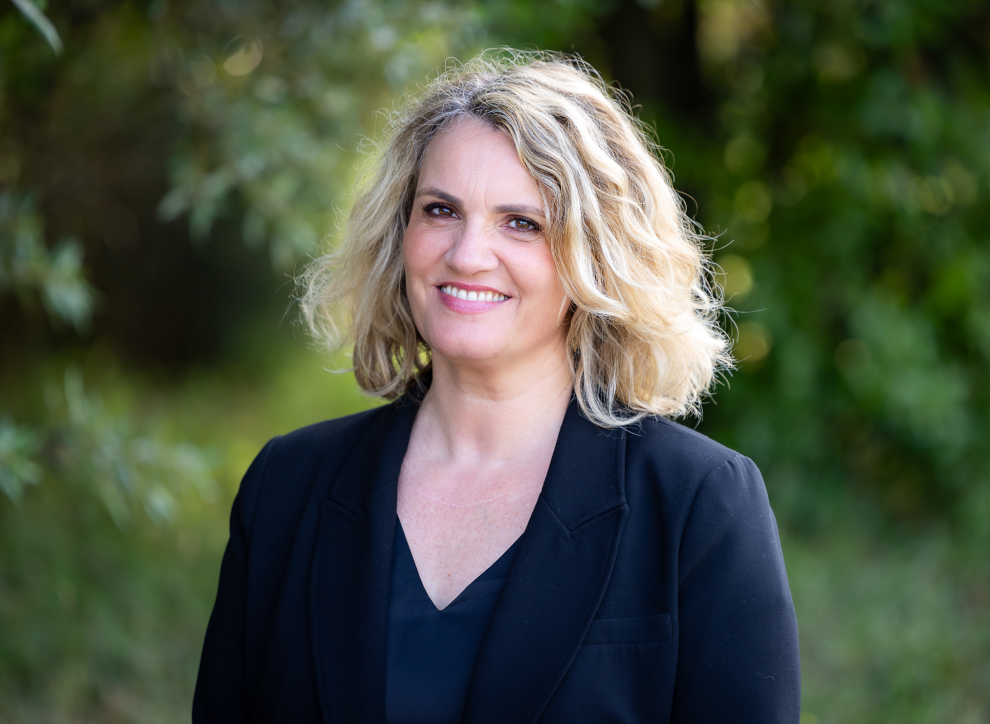
By Caroline Grand, Director of Communications at La Rochelle Université and member of the Cap'Com steering committee.
A classic head-of-department moment: two colleagues ask me for time off. I approve it without hesitation, mindful of my team’s wellbeing. “We’re going to Le Mans for the GP Explorer. It’s going to be wild!”
Blank stare. As often in moments like these, my life flashes before my eyes. I remember my bowl haircut and corduroy dungarees, my very first Nokia 3410… and then finally I ask for a translation. Patiently, my younger colleagues enlighten me.
Apparently it’s a Formula 4 race organised by ‘Squeezie’, a superstar YouTuber, that attracts amateur drivers from across the internet world. A memory surfaces: a controversy during a previous edition, when a female participant was hit with a torrent of sexist abuse after a collision, until Squeezie himself stepped in to reason with his community.
Right. Now I’m with them – at least, I know what they’re on about. “One of those online things.”
Anyway. I sign off their leave. The craze for a motor race surprises me – but my colleagues’ curiosity doesn’t. They’re always chasing the next concert or big event. This time I don’t even need to set up a Ticketmaster account to help someone “maybe get the chance to buy” a ticket for Taylor Swift: the seats are long gone.
Off you go, girls. Keep me in the loop – I’m intrigued.
That evening I get home and catch up with my student daughter. Between two sessions of revising her law notes, she casually tells me her weekend plan: watching the GP Explorer. Her too? Honestly. If even my daughter’s watching it, then clearly something’s happening…
What exactly is this thing?
My daughter explains the concept. And there I am, fascinated, discovering an event unlike anything I’d seen before. The GP Explorer is a two-day Formula 4 race. “You know, it’s The Last Race. There won’t be another after this. It’s going to be massive,” my daughter tells me.
On the legendary Le Mans 24-hour circuit, streamers, YouTubers and rappers – sometimes all three at once – have turned into racing drivers. Some even got their driving licences just so they could train and take part. The whole thing was dreamt up and orchestrated by Squeezie, video creator, influencer and a real heavyweight of the French internet: fifteen years of streaming, 19.8 million YouTube subscribers and 5.8 million on Twitch.
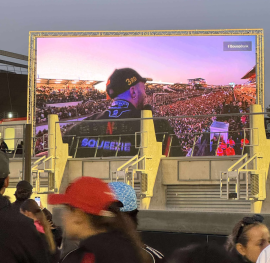
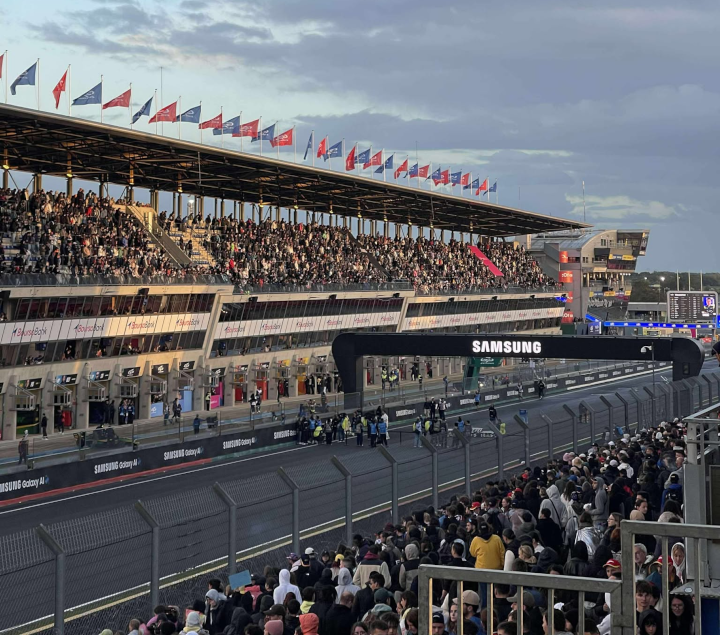
We log on to Twitch (well… my daughter logs in on her account) and that’s when the sheer scale hits me. Grandstands packed with 200,000 spectators, many of them young people in hoodies; real racing cars; real mechanics; and all of it happening on a track normally reserved for professional drivers. Across the two days, around 600,000 viewers stay connected on Twitch, with the audience soaring to 1.4 million for the final race. Behind the scenes there’s a €10-million budget (with €13.3 million from ticket sales alone), a highly professional operation involving 5,000 people, major sponsors, the Patrouille de France flying overhead before the final race, and pyrotechnic shows. For this third (and announced final) edition, France TV bought the rights to broadcast the last race, which was a smart move, as it drew 1.22 million television viewers.
Wait… who is he? And what does he do?
I’m writing all this after the weekend left me slightly stunned and after doing a bit of homework. At the time, I didn’t have these figures. In fact, I barely understood what was going on. What struck me first was the intensity of the excitement – both in the stands and in the Twitch chat. I needed answers, so I turned to my daughter.
It took a fair amount of patience and careful explanation for her to explain both who these internet stars are and what exactly they do in their videos. Six nationalities represented. Twenty-four drivers, including six women. Twelve duos forming twelve teams sponsored by major brands, including Netflix, Lego, Alpine, Subway and Durex. Streamers, rappers, gamers, video creators producing comedy, sport, storytelling, lifestyle content, dance… in short, the full creative spectrum of internet culture, all gathered on the same circuit. It’s a meeting point of worlds: gaming, content creation and music – with several rappers behind the wheel.
Even the soundtrack has its own engine, in the form of an album produced by SCH (rapper and driver, naturally), involving 27 artists. Released on 3 October, the record is already racing ahead: a gold single in just a few days (the fastest this year in France), over 21,000 sales within hours and the second-strongest global debut on Spotify. It’s a true soundtrack to the event, and one that keeps the GP Explorer alive well beyond the racetrack.
By now, my communicator’s curiosity – and my old anthropologist’s reflexes – were fully switched on, so I turned to my fellow Cap'Com colleagues, the ones whose curiosity knows no limits, and posted in our group chat: “Anyone watching the GP Explorer this weekend? “No idea what you’re talking about,” replied one colleague. But two others laughed: “My daughters, 19 and 23, have been completely hooked since yesterday,” said one. “I asked my student daughter, who rolled her eyes: of course I’m watching the race this weekend!” answered another. While we were busy polishing our comms plans, they were busy setting the internet alight. Let’s admit it: we may already have one foot firmly planted on planet Boomer…
“It’s family, brother”
Georges Lapassade – the psychosociologist who was thinking about youth culture before almost anyone else – would probably have loved this thunder of engines. He saw rap and the suburban cultures as legitimate forms of expression and citizenship. In the GP Explorer he would have recognised a vivid illustration of his ideas: self-organisation, experimentation and, above all, the end of the “myth of the adult”.
Here there is no authority to persuade, no institution from which to gain approval. Just a generation organising itself, creating and getting swept up in the moment. Creators, entrepreneurs, artists – sometimes all at once – forming a kind of coherence born in noise, emotion and joy.
Youth always invents its own starting line
“We feel these emotions because we know these people so well – they’re family,” says one driver who finished third in a support race. That simple sentence says everything. It describes an entire culture: they don’t merely consume content, they participate in it. They’re not watching a show; they’re part of it.
I can picture Lapassade somewhere, headphones on, applauding in front of a Twitch stream. Youth always invents its own starting line.
OK boomers
And yet it wasn’t so long ago that TV presenter Thierry Ardisson delighted in mocking Squeezie – that “unknown youngster” who, back in 2017, already had nine million subscribers. In the “So, who are you?“ segment of his talk show Salut les Terriens, Ardisson fired off one cutting remark after another, yet the young creator, already remarkably composed, didin’t seem rattled by “It must feel strange discovering an old medium called television” and “These days only old people watch TV”.
For all his scorn (“Do you really think your fans will buy a book?” and “Eating pizzas live has become a job”), Ardisson probably already sensed that the world of images was already shifting beneath his feet.. Squeezie, meanwhile, stayed calm, measured and polite: “No, I don’t think television will disappear. Streaming and television should exist side-by-side.”
An entire world has reinvented itself without waiting for us. A generation that doesn’t need permission to build community, meaning and shared pride.
Eight years on, Squeezie has attracted millions of viewers around a Formula 4 race and ended his live stream with the same simplicity: “I’m so proud of the internet.”
Truth be told, somewhere deep down, so are we. Proud of what the internet has made possible, proud even to make it the subject of our training sessions, Golden hashtags and professional gatherings. But between Ardisson and Squeezie lies an entire world that has reinvented itself without waiting for us: a generation that doesn’t need permission to build community, meaning and shared pride.
Institutions and their long memory: are we already out of date?
What if our institutions were also struggling a little as they go round the corners?
The anthropologist Françoise Zonabend, in La Mémoire longue, showed how societies endure by repeating their founding gestures. Our public institutions work in a somewhat similar way: operating on a slower clock, to the rhythm of procedures, hierarchies and comforting codes. This long memory gives them legitimacy, but it can also freeze habits and language. We worry about “how to speak to young people without sounding old”, while they are busy elsewhere inventing entirely new spaces for communicating, creating and coming together.
The GP Explorer is the exact opposite: a short, shared memory where meaning is forged in real time. Live emotion, a collective stream and a story unfolding without intermediaries. Two different tempos, but the same need, namely to belong to a community that shares the same codes and references.
And perhaps that is the crux of the matter: this ability to invent new spaces of expression together, without waiting for an institution to grant permission.
It is also what Georges Lapassade championed. A subtle pedagogue, he had that rare habit of taking “the field” seriously, roaming through places, cultures and disciplines to understand how young people were inventing their own forms of collective life. For him, “roaming” was not simply about observing – it meant crossing boundaries, connecting worlds and experimenting, with a lively, curious, slightly unruly attitude. Come to think of it, that’s the very DNA of communication when it’s working at its best!
Where does that leave us?
What if we, as public communicators, adopted the same stance as that of explorers of the field? Becoming connectors rather than prescribers, and certainly not passive bystanders. For us, “roaming” would also mean accepting to shake up our habits: breaking out of our frameworks, experimenting and welcoming popular and digital culture into our collective narratives.
Staying relevant is not just about “communicating to young people”; it’s about learning to communicate with them. Matching their rhythm, their humour and their way of building connections. It means bringing communication back to its original purpose: a living, honest, shared dialogue. This requires acceptance of other forms of storytelling, other aesthetics and other tempos. “Speaking with”, rather than “speaking about”. Accepting that today a sense of community can emerge just as easily from a Twitch stream as from a local town-hall meeting.
Perhaps that is our role as public communicators: to understand before explaining, to connect before convincing and to inspire before prescribing.
Ultimately, perhaps that is our role as public communicators: to understand before explaining, to connect before convincing and to inspire before prescribing. To be where things are moving, where people speak authentically and connections form without job descriptions or steering committees. In short, to rediscover the living side of our profession.
Who would have thought that a Formula 4 race could reset our compasses? This generation that creates without waiting has already been captured by French rapper Orelsan in his own words: “If you want to make movies, you just need something that films. The only rule is not to give up.”
Everything is there – the drive, the movement and the courage to try.
That weekend, the GP Explorer didn’t just bring me up to speed on youth culture. It reminded me what truly powers public communication, namely the urge to keep exploring, inventing and understanding. And clearly, these young people are seriously good at it.
Main photo credit: Ella Hassine.