
Public trust, disinformation, and European identity in the Western Balkans
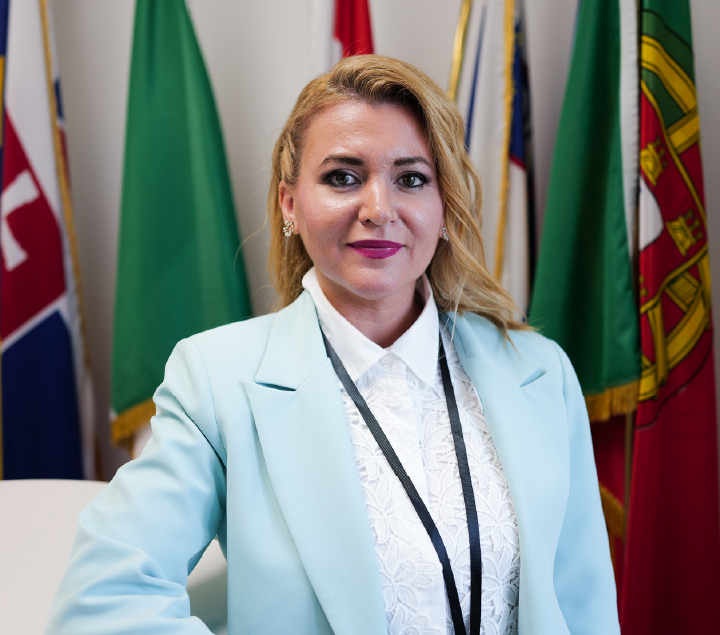
At the international seminar held in Rome on 7 and 8 May, Katerina Veljanovska, Professor of Political Science and geopolitical analyst, discussed the role of public communication in strengthening European identity in the Western Balkans and South-East Europe. We spoke with Katerina, an expert working at the forefront of issues surrounding public trust, disinformation and local strategies.
Commonality: Could you please briefly introduce yourself?
Pr Katerina Veljanovska Blazhevska: I am a political scientist, professor, and analyst specializing in public policy, strategic communications, security, and geopolitics. Currently, I serve as a Full Professor at the Faculty of Security Studies at MIT University in Skopje, North Macedonia.
My academic and professional experience includes international research, trainings, and teaching engagements in Germany, Poland, Austria, Romania, Croatia, and the United States. In 2023, I was a Postdoctoral Research Fellow at the Institute for Development and International Relations (IRMO) in Croatia, focusing on geopolitics and environmental security.
I am also actively involved in international expert and research networks, including the DSC2 – Defence, Democracy, and Security Strategic Communication Community, and I serve as a member of the Scientific and Academic Standards Board at the Stirling Centre, University of Stirling in Scotland, UK. In addition, I am Vice President of the “Research Network for Interdisciplinary Studies of Transhistorical Deliberative Democracy,” a European scientific research network supported by the European Union, bringing together more than 200 researchers and institutions from 31 countries. Alongside my academic work, I have extensive experience as a consultant and trainer in communications, leadership, and soft skills development, and I am the author of several books and scientific publications.
Commonality : Could you tell us more about the issues you deal with on a daily basis: what topics do you work on at MIT and as a geopolitical analyst, and what challenges are you currently facing in terms of public communication in North Macedonia?
Pr Katerina Veljanovska Blazhevska: On a daily basis, my work combines academia, research, public policy analysis, and strategic communication. At the University, I teach and conduct research in the areas of security studies, political systems and geopolitics. I also mentor students and young professionals, particularly in the fields of leadership, critical thinking, and communication skills.
One of the key challenges in public communication in North Macedonia today is the growing polarization of public discourse.
As a geopolitical analyst, I focus on regional and global security developments, hybrid threats, strategic communication, disinformation, democratic resilience, and the impact of geopolitical changes on the Western Balkans and Europe. A significant part of my work also involves analyzing how digital transformations and information ecosystems influence political processes and public trust.
One of the key challenges in public communication in North Macedonia today is the growing polarization of public discourse, combined with the rapid spread of misinformation and manipulative narratives through digital platforms and social media. This creates difficulties in building constructive dialogue and trust in institutions.
At the same time, communication today requires not only expertise, but also responsibility, clarity, and resilience, especially when discussing sensitive geopolitical and security-related topics in a highly dynamic international environment.
Commonality: Do you have any best practices or initiatives developed at a local level that might be of interest to the European communications network?
Pr Katerina Veljanovska Blazhevska: Yes, several local initiatives and practices from North Macedonia could be valuable within a broader European communications network, especially in the areas of strategic communication, community resilience, and digital literacy.
One positive example is the growing cooperation between academia, civil society organizations, media professionals, and the security sector in addressing disinformation, hybrid threats, and public awareness challenges. Through research, educational programs, trainings, and public discussions, we are increasingly working on strengthening critical thinking, responsible communication, and resilience among citizens, particularly among young people.
We have developed a certain practical adaptability and awareness regarding communication challenges in periods of uncertainty and rapid change
At the same time, I believe it is very important that cooperation with European partners remains a two-way process based on mutual learning and exchange of experiences. Of course, countries from the Western Balkans can learn a great deal from European standards, institutional practices, and strategic communication models. However, I also believe that the European Union can learn from our regional experiences - especially in dealing with complex societal dynamics, polarization, crisis communication, intercultural dialogue, and resilience in sensitive geopolitical environments.
Because societies in the Western Balkans have gone through continuous political, social, and security transformations, we have developed a certain practical adaptability and awareness regarding communication challenges in periods of uncertainty and rapid change. I believe these perspectives can offer valuable insights for broader European discussions on democratic resilience, strategic communication, and strengthening societal trust.
Commonality : What took you away from the work we did over these two days together in Rome? What do you expect from this cooperation between European communications professionals?
Pr Katerina Veljanovska Blazhevska: What I take away from these two days is the strong understanding that public communication today cannot function in isolation. If we want real impact and public trust, we need stronger cooperation between communication professionals, academia, media, civil society, institutions, and digital platforms.
One of the key messages for me was that communication should not only react to crises, disinformation, or FIMI, but become more proactive, adaptive, and human-centered. Today, simply debunking false information is often not enough - we also need anticipation, pre-bunking, media literacy, and long-term resilience-building.
I also found very important the discussions on trust, engagement, and moderated deliberation, especially in increasingly polarized digital environments shaped by algorithms and fast information flows.
From this cooperation, I expect continued exchange of knowledge, experiences, and best practices, but also stronger long-term partnerships across Europe. I believe we can learn a lot from one another, and together build more resilient, informed, and trust-based democratic communication ecosystem.