
Rome: Europe as a workshop in public communications
An international seminar is not only a chance to compare practices, it is also an opportunity to confront challenges that transcend national borders, such as disinformation, artificial intelligence, declining trust in democracy and engaging younger generations. The third international seminar organised by the Club of Venice and Cap'Com in Rome highlighted a simple reality: local public communication is deeply affected by the divisions reshaping our world.
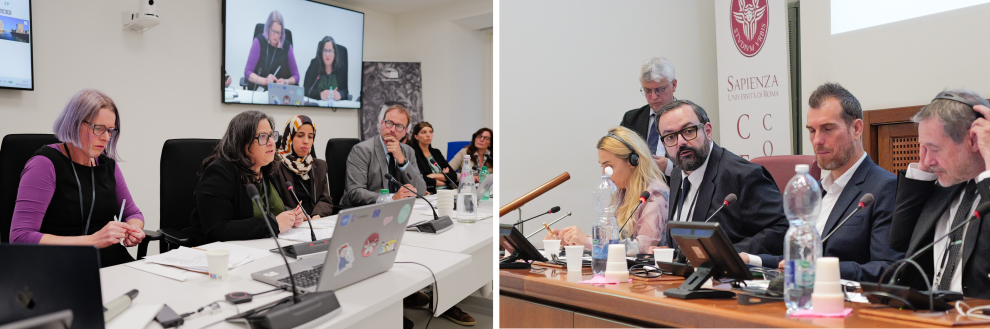
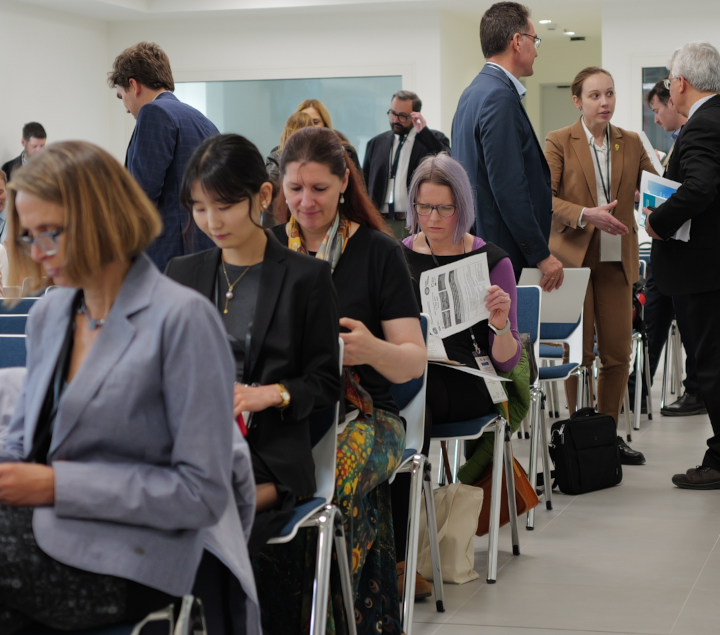
Rome was more than just a venue. Gathered at the heart of the European institutions in Italy – alongside academic partners, representatives of the European Commission and the European Parliament, researchers and international networks of public communicators – participants in our 2026 seminar focused on a question that now lies at the heart of our profession: how can we communicate effectively in democracies weakened by distrust, information manipulation and increasingly fragmented public spheres? The assessment was unequivocal from the outset. One opening speaker described the current period as an "age of predators", in which authoritarian regimes seek to undermine liberal democracies by exploiting their internal weaknesses. Disinformation is no longer background noise; it has become a strategic instrument (see the book by Klimentini Diakomanoli on this subject, co-published by Cap’Com). Hybrid warfare, cognitive warfare, the manipulation of social media and the polarisation of public opinion: these are no longer the terms of poorly managed digital communication, but rather the language of political and cultural confrontation.
Three seminars laying the foundations for international cooperation
2022: the starting point in Toulouse Cap’Com and the Club of Venice began a new phase of international cooperation centred on the changing nature of public communication and the emerging democratic challenges.
2024: strengthening convergences in Strasbourg The dialogue became more structured with European and academic partners, focusing on digital transformation, citizen participation and new institutional practices.
2026: Rome, coming of age The third international seminar was structured around four main sessions:
- Cooperation with European institutions, research communities and the media;
- AI, digital platforms and trusted public communication;
- Engaging young Europeans and rebuilding democratic trust;
- European identity, inclusion and countering disinformation.
Running through the entire programme was a shared ambition – to make international cooperation a practical resource for public communicators facing today's profound societal changes.
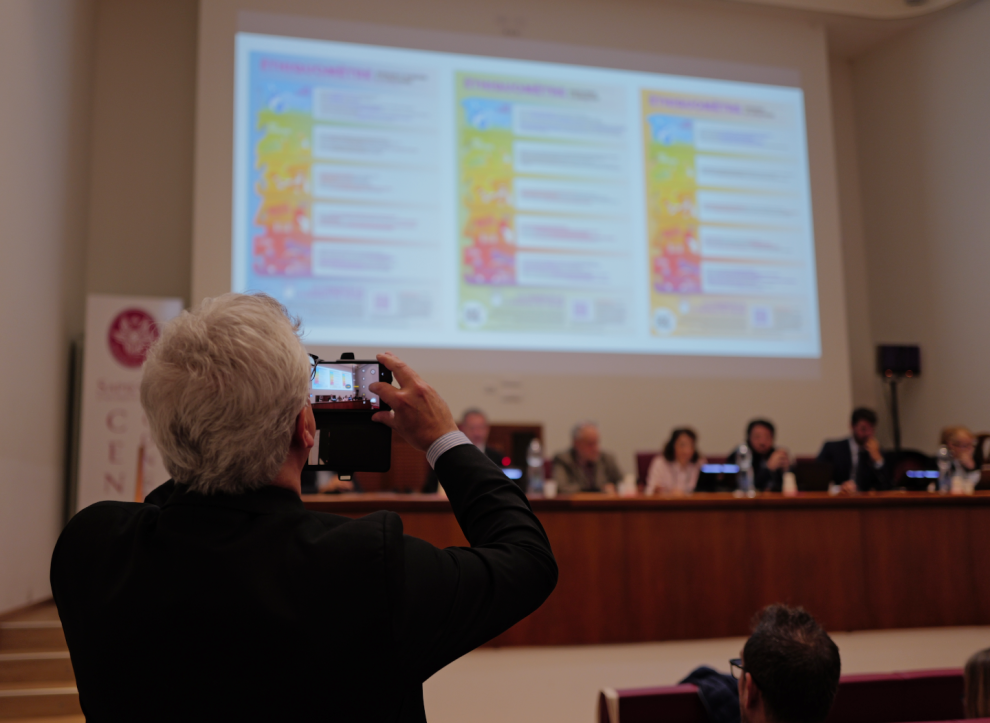
For us, these challenges are anything but theoretical. Local authorities may not be exposed in the same way as European institutions, but they face, at their own level, the same symptoms, namely scepticism towards official communication, declining trust in expertise, the blurring of the line between opinion and information and increasingly polarised public debate. In that sense, the discussions in Rome resonated strongly with the realities of our day-to-day work. The seminar also provided an opportunity to present – to a particularly attentive audience that requested a full translation – the recently published self-assessment guides, called the Ethiquomètres de la com publique. The practical focus proved highly appealing, despite the differing regulatory environments across Europe. What particularly resonated with the audience was their pragmatic outlook and educational approach.
When trust becomes a professional challenge
One of the seminar's key contributions was to reaffirm the fundamental purpose of public communication: not merely to disseminate information, but to help build democratic trust through transparency and ethical practice. At a time when digital platforms often reward virality over truthfulness and algorithms amplify polarising content, the question is no longer simply which tools to use, but what responsibilities communicators should take on. Several discussions highlighted the need to reconcile technological innovation with ethical standards. Artificial intelligence, a recurring theme throughout the discussions, was presented both as a source of efficiency and as a contributor to further confusion.
The question is no longer simply which tools to use, but what responsibilities communicators should take on.
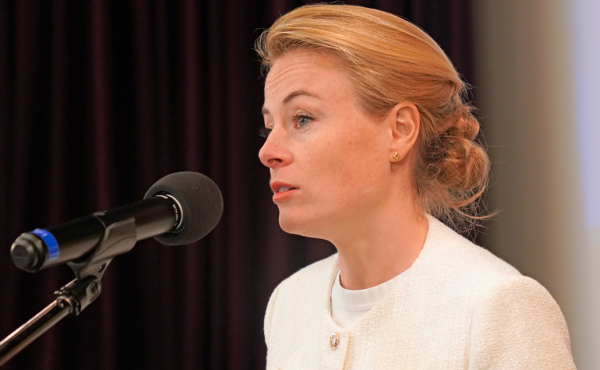
For public communicators, this tension is familiar. Do they need to be present on every platform? Should they continue investing in digital spaces whose operating principles they may not fully endorse? A French speaker, Caroline Grand, Director of Communications at the University of La Rochelle, spoke about the decision to leave certain platforms that had become incompatible with the values upheld by a public institution. It is a distinctly contemporary issue. Public communication cannot simply follow trends; it must also question the environments in which it operates, particularly when addressing younger audiences.
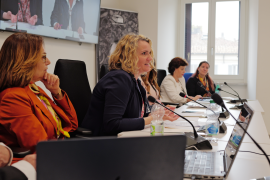
Young people as partners, rather than a target audience
One theme that ran consistently through the discussions was young people. In Rome, the subject was addressed in a very practical way and not without a degree of self-criticism. One European public-opinion specialist candidly acknowledged that institutions frequently promote youth participation while continuing to make decisions behind closed doors among experts. How can institutions reach people who no longer engage naturally with official channels? How can purely top-down public communication be avoided? How can room be made for discussion, debate and experimentation?
Here, local authorities have a unique advantage. They operate practically, locally and at the level of everyday life. While Europe can sometimes seem remote, municipalities, metropolitan areas, departments and regions remain tangible spaces where citizens engage directly with public institutions. This gives public communicators a distinctive role: translating, connecting and sometimes mediating between public policy and people's lived experience. This idea of translation came up repeatedly. Translating complex policies. Translating European issues. Translating scientific evidence in an environment saturated with competing narratives. The closer connections with the academic world, strongly felt throughout this seminar, were meaningful. In a climate where opinion sometimes competes with facts, public communication is rediscovering an important educational role. Not to impose an official truth, but to help restore discernment to public debate.
Public communication as a form of professional diplomacy
This third international seminar also highlighted a broader strategic issue: the growing role of independent organisations such as Cap'Com and its Italian counterpart, Compubblica. For several years, we have been building these partnerships, forging links with European and international networks and creating spaces for dialogue between practitioners, researchers and institutions through our English-language newsletter Commonality. We exchange views on issues of democratic resilience, information sovereignty, inclusion and citizenship. We identify emerging challenges and share good practices. Decisions and debates taking place in Brussels, Rome or elsewhere ultimately find their way into local communication practice.
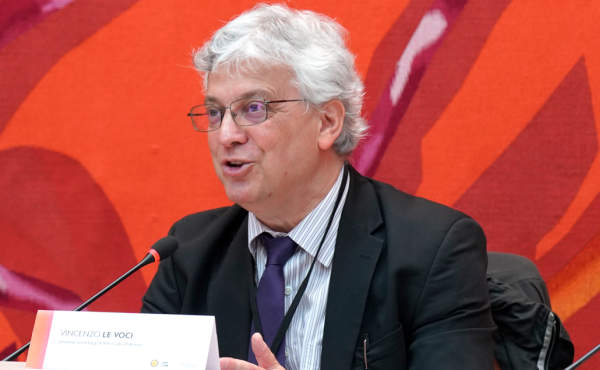
Cap'Com was also represented by Nicolas Cazes, Director of Communications for the Pyrénées-Atlantiques Department, who spoke about cross-border communication – a topic we will revisit – and by Natalie Maroun, crisis communication specialist and international expert, who shared her experience from the field. Alongside around thirty other speakers, Cap'Com played a prominent role while also co-organising the seminar as an associate member of the Club of Venice. As Vincenzo Le Voci, Secretary General of the Club of Venice, reminded participants, cooperation must be grounded in a clear awareness of our responsibilities within today's media and civic environment. In a world saturated with competing narratives, public communicators are not merely content producers. They are also, in a modest but very real way, active players in “democratic quality”.